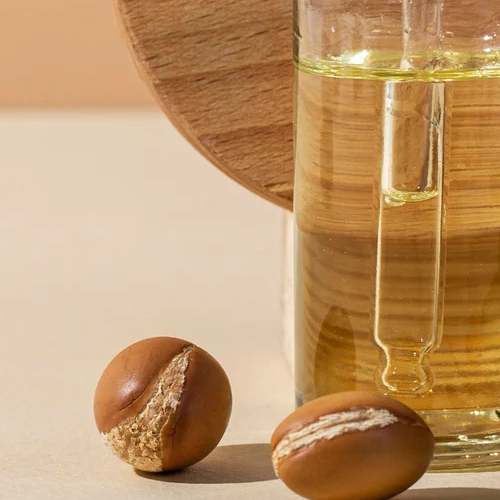
Argan Oil Settling and Filtration: Ensuring Quality for Global Cosmetic Buyers
Settling and filtration are essential stages in the production of high-quality Moroccan cosmetic argan oil. Following mechanical extraction, crude argan oil may contain fine kernel particles and suspended solids. Controlled settling and appropriate filtration help remove these impurities, improve visual clarity, and prepare the oil for quality assessment, packaging, and international distribution.
For cosmetic manufacturers, skincare brands, private-label producers, wholesale distributors, and international importers, professional argan oil clarification is an important part of a consistent and quality-focused supply chain.
1. Natural Settling of Crude Argan Oil
After mechanical extraction, crude cosmetic argan oil is transferred into suitable, clean settling tanks. The oil is allowed to rest so that heavier solid particles can gradually separate from the liquid and accumulate at the bottom through gravity.
This process, known as natural sedimentation, reduces the amount of suspended material before filtration. The required settling period depends on the oil's characteristics, particle size, temperature, and processing conditions.
Careful handling during settling helps limit unnecessary exposure to air, light, moisture, and external contaminants. These precautions are particularly important when producing cosmetic-grade argan oil for professional skincare and personal-care applications.
2. Professional Filtration of Argan Oil
Once settling is complete, the clarified oil is carefully separated from the sediment and passed through appropriate filtration equipment. Depending on production capacity and the required product specifications, filtration systems may include compatible filter cartridges, filter plates, filter bags, or other equipment designed for edible oils or cosmetic raw materials.
Filtration removes remaining suspended particles and fine sediments, helping improve the visual clarity and consistency of the finished argan oil.
For cosmetic applications, filtration equipment and contact materials should be suitable for the product, maintained properly, and operated under hygienic conditions. The filtration method should be selected according to the oil's characteristics, intended application, and customer specifications.
Filtration is primarily a physical clarification process. It does not, by itself, guarantee microbiological safety, remove every dissolved contaminant, or establish compliance with a particular cosmetic or organic certification standard.
3. Preserving the Quality of Cosmetic Argan Oil
Moroccan cosmetic argan oil is valued by the beauty and personal-care industries for its naturally occurring fatty acids, tocopherols, and other minor constituents. Appropriate processing practices help protect these characteristics throughout production.
During settling and filtration, quality-focused manufacturers prioritize:
- Controlled processing: Avoiding unnecessarily high temperatures and excessive processing conditions.
- Oxidation prevention: Limiting avoidable exposure to oxygen and light to help preserve oil quality.
- Hygienic handling: Using clean tanks, suitable transfer equipment, and properly maintained filtration systems.
- Consistent appearance: Reducing visible suspended particles and sediment.
- Batch traceability: Maintaining production records and identifying batches for quality assurance.
The filtered oil should be evaluated against established product specifications. Depending on the buyer's requirements, quality checks may include appearance, odor, acid value, peroxide value, fatty acid profile, and other relevant laboratory parameters.
4. Quality Control Before International Export
Before packaging and shipment, filtered argan oil should undergo suitable quality checks to verify conformity with the agreed commercial specifications. Reliable documentation helps international buyers evaluate the product and manage their procurement requirements.
Depending on the destination market and intended use, buyers may request:
- Certificate of Analysis (COA).
- Technical Data Sheet (TDS).
- Product specification sheet.
- Relevant laboratory test reports.
- Batch identification and traceability records.
- Applicable organic certification or regulatory documentation, where relevant.
Filtered argan oil should be transferred into clean, compatible, tightly closed containers that help protect it from light, air, moisture, and contamination during storage and transportation.
Packaging formats should be selected according to order volume, handling requirements, destination market, and the importer's specifications. Shelf life and storage conditions should be established using appropriate product data rather than assumptions.
5. Why Settling and Filtration Matter to B2B Buyers
For cosmetic ingredient distributors, skincare manufacturers, contract manufacturers, and private-label brands, a reliable clarification process supports consistent raw-material quality and efficient downstream production.
The principal benefits include:
- Improved visual clarity and reduced suspended solids.
- More consistent appearance between production batches.
- Preparation for subsequent quality control and packaging.
- Reduced risk of visible sediment in properly processed and stored oil.
- Better documentation of production and quality-control procedures.
These benefits are relevant to companies sourcing bulk cosmetic argan oil for facial oils, body-care formulations, hair-care products, massage oils, and other personal-care applications.
6. Moroccan Argan Oil for International Markets
Morocco is the natural origin of argan oil and an important sourcing destination for international buyers seeking this distinctive plant-derived cosmetic ingredient. Professional sourcing requires attention to product specifications, processing methods, quality documentation, packaging, and export logistics.
Settling and filtration form part of a broader argan oil production process that begins with harvesting mature argan fruits and continues through drying, pulp removal, shell cracking, kernel selection, mechanical extraction, clarification, quality control, and packaging.
For importers, establishing clear specifications and documentation requirements with the supplier helps support transparent commercial transactions and long-term business relationships.
Source Moroccan Cosmetic Argan Oil for Your Business
Are you sourcing cosmetic-grade argan oil for your manufacturing business, wholesale distribution network, skincare brand, or private-label product range?
Contact our team to discuss bulk argan oil requirements, technical specifications, packaging preferences, order quantities, and destination ports. We welcome inquiries from international importers, cosmetic ingredient distributors, beauty-product manufacturers, and wholesale buyers seeking Moroccan argan oil for professional use.
Request a quotation, technical data sheet, and available quality documentation for your next argan oil purchase.